Impact

Impact
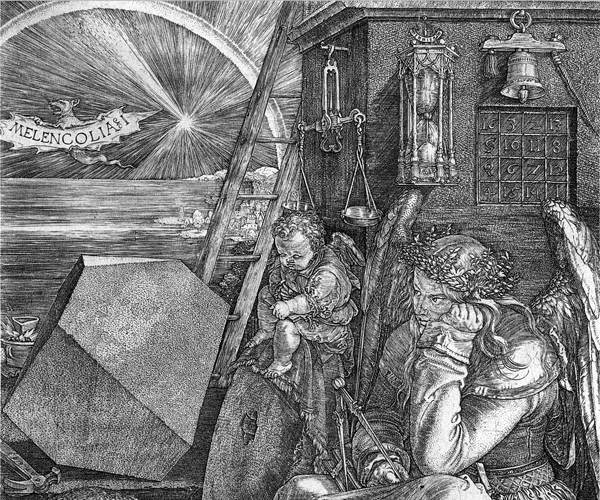
In this periscope, a selection of social science and humanities scholars familiar with UK higher education and research have been asked to reflect on the challenges and opportunities that "impact" poses for critical knowledge production and the British academy going forward. From a range of different disciplinary, practical, and theoretical perspectives that straddle the critical social sciences and humanities, the contributors have pushed the implications of Britain's new "impact" agenda to some of its most worrying and hopeful potentialities alike. But focused as this collection is on the British context, the entries also speak to a more global concern regarding the restructuring of critical space in the modern university. We invite you to join the discussion. Image: Melencolia I by Albrecht Dürer, 1514.

Impact: an Introduction

The new system for assessing the quality of research produced by institutions of higher education in the UK and the academics they employ will be known as the "Research Excellence Framework" (REF). Replacing the "Research Assessment Exercise" (RAE), the inaugural REF exercise will likely take place in 2014, with one of its key components being the measurement of "impact," on the part of both the research and the researcher.  The precise contours of"'impact" are currently out for "consultation," a process likely to take a little longer given the UK's recent change of government. However, the Higher Education Funding Council for England (HEFCE) currently describes "impact" as: "where high quality research has contributed to the economy, society, public policy, culture, the...>>

The Real Knowledge Transfer

In Britain, knowledge transfer (KT) is taking a new turn.  As a university policy, KT emphasized intellectual property rights.  The dream of the managers of the university was to patent knowledge produced in university departments, laboratories, and lecture halls.  This new proprietary knowledge would then either earn rent from the private sector, and in some cases the public sector, or lead to the founding of new private firms, owned in part by the university, the so-called spin-off.This dream has been notoriously elusive for most universities in Britain, with many spending more on KT offices than they earn in KT revenues, and some KT directors said by the Times Higher Education magazine to make more than senior professors.  Indeed the UK...>>

The Impact of "Impact"

Reading a grant application for a Danish research project that I participate in, the following sentence caught my eye: "[A]pplicability is desirable, but not a demand. Grundforschung is the main aim." Taking "applicability" to be roughly equivalent to "impact," the current buzzword of the UK Research Councils, I found myself enviously contemplating the research culture that could produce such a sentence. In the UK today, academics cannot afford not to want to be impactful, or their work to be 'applicable'.  On every application for funding we make to any Research Council, a "statement of impact" is not merely desirable; it is very much a demand. Within the next round of national research assessment, the "REF" (which itself keeps changing its...>>

The Curious and the Useful

Should scholars and scientists concentrate on being useful, or should they be guided primarily by curiosity? This stark choice--between usefulness and curiosity--has been mobilised implicitly by the Higher Education Funding Council for England (HEFCE) in recent proposals to assess academic research on the basis of its social and economic impact. Reporters and commentators have been more explicit about the thrust of this. As The Guardian's Polly Curtis put it, "useful" research would be rewarded while pointless university studies [would] be weeded out." The UK's academic trade union, the University and College Union (UCU), has framed its resistance to the new proposals as a defence of curiosity, asserting that "curiosity-driven research ... has led to major scientific and cultural advances."  On...>>

'Creative' Functionalism and Continental Philosophy at Middlesex

On May 10th, 2010, the management of Middlesex University in England shut down its Philosophy Department. This act provoked a spate of letters in the newspapers. Now, while the general attack on the Humanities in the United Kingdom has been going on for some time, --for a good many years before the credit crunch, as any lecturer in non-English languages will testify-- the events in Middlesex are interesting because of what they tell us about the current state of the academy, and about what the Government and the elite classes regard as its purpose. The man behind the closure, one Ed Esche, the Dean of the School of Arts and Humanities, said that this department made no 'measurable' contribution to...>>

Deepwater Impact

The simple fact that we are discussing "impact" proposals on the humanities and social sciences indicates a depressing failure of "impact" itself. Long after the contemporary academy has become bored with Foucauldian critiques of social control through assessment and quantitative metrics (let alone earlier Marxist attacks on reification), none of these insights has prevented the most basic inequities from being proposed as structuring norms. Why is it that the social policy malformations of neoliberal economics, long after organizing the wholesale bankruptcy of entire nations and societies, continue to push forward, like a managerial Deepwater Horizon besmirching the intellectual landscape with an unstoppable ooze of toxic slime?In fact, the ideology of "impact" (as currently being discussed by HEFCE) contains a basic...>>

Academic Free Fall

When I left Britain in the 1970s to pursue a doctorate in the US, it was an item of faith that US universities were far more corporatized than their UK counterparts, in the social sciences as well as the natural sciences.  To be sure the British system was often stuffy and harboured a lot of dead wood, but few looked toward an American-style academia.  Today the situation is dramatically transposed.  British social sciences are far more corporatized today than in the US, and expatriate British academics returning to the UK are regularly stunned at the wholesale intellectual destruction of UK universities.  To a non-British academic, the language of academia is almost impenetrable, aping the corporate world on which it was...>>

Researching the Global South in an Age of Impact

Paula's Story:In October 2009 I ran (with the help of local researchers) a dissemination workshop in the basement of a community library in the informal settlement of Cato Crest, Durban, South Africa. I was feeding back to project participants, other residents and local politicians recent research findings on men and violence and the institutional structures used by residents to manage such violence, which had focused on that particular settlement. The workshop generated a mix of awkward tensions and hostility but also appreciation and acknowledgement. Violence was indeed a key issue, and it was highly gendered. Some men had found the research liberating and cathartic, describing their involvement as "...taking half of the big heavy bag [from] me..." Clearly, men's experiences...>>

The Impact Effect

Recently RCUK, the umbrella body for the seven UK research councils, had a discussion about the language of impact. As many will know, all councils require statements about impact on grant applications. We discussed whether these should be called 'plans' or 'proposals' for impact. Some, including me, opposed 'plans' because it suggests structured and forecastable development, whereas 'proposals' better captures the revisable uncertainty of research outcomes. There were views on both sides and in the end we found a compromise with 'pathways' implying both purpose and direction and a plurality of potential outcomes.Behind this slightly Jesuitical discussion are real issues. Impact is a deeply felt and controversial matter and, as in most disputes of great sensitivity, text is read and...>>