



 AmplifierSocial Text Collective
Zionism’s Political Unconscious by Nadia Abu El-Haj Verso Blog A Feminism That Embraces Humanity by Lila Abu-Lughod Critical Inquiry Seeing Genocide: Israel’s Weaponization of Images Since October 7 Obfuscates Its Genocidal Campaign against Palestinians by Ariella Aïsha Azoulay Boston Review … Continue reading "Amplifier"
Palestine Now–Call for EssaysSocial Text CollectivePalestine Now Edited by Maya Mikdashi, Jasbir Puar, Helga Tawil-Souri Palestine Now editors invite contributions reflecting upon current and historical conditions in and of Palestine and Israel. As we collectively confront the “ethical indifference with which racial violence is met” (Denise … Continue reading "Palestine Now–Call for Essays"
 On Famous Hermits by Stacy SzymaszekWill Fesperman
In the fall of 2023, it is a bit late to be reviewing Stacy Szymaszek’s Famous Hermits, which came out months ago. But that does not matter so much. In fact, there are parts of Famous Hermits that seem already … Continue reading "On Famous Hermits by Stacy Szymaszek"
 Three PoemsTeline Trần
Hot Dish Since under, I had spoken one word a day To a complement a meal, I would utter, ‘Breakfast,’ ‘Lunch,’ or ‘Dinner.’ To move from coming, I speak slighter Worded widely that the cheeks bled, Spinning trellises before … Continue reading "Three Poems"
 Sacre du CouncilSára Bányai
On Easter day I went to visit my friend to celebrate together in a silly, agnostic fashion while overdosing on vegan chocolate eggs. We agreed to do it behind closed doors as we did not want to be associated publicly … Continue reading "Sacre du Council"
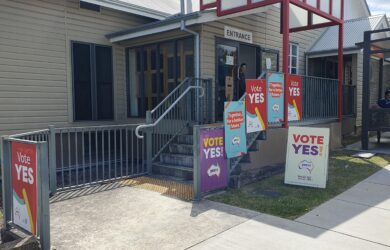 Yes/No: Referenda and MandatesSeán Cubitt
I. On October 14, 2023, Australia voted in a referendum on the Indigenous Voice to Parliament, an attempt to enshrine consultation with Indigenous peoples in the Australian constitution. The proposal originated in the Uluru Statement from the Heart, adopted by … Continue reading "Yes/No: Referenda and Mandates"
 Where Trees Seek ShelterBaraah Abu Al Rob
She’s just a kid. Kids don’t mourn their loss; they don’t know what their loss is. YET. She’s just 2, she definitely won’t remember the tears. It only took the “kid” 2 seconds to stop being one. That’s exactly … Continue reading "Where Trees Seek Shelter"
 My Fast Bike!Saed Abu-Hijleh
I rode my bike, He rode his F-16 and tank, I sang my song, He shot me and gained his rank. I am the terrorist, he is the victim! I am a martyr now and did not go to school, … Continue reading "My Fast Bike!"